
Trolling With Side Trackers® for Midshore Bluefin Tuna in the Northeast
By Captain Kevin Albohn of Blue Line Charters
Over the past several years, I’ve watched increasingly strict regulations on inshore species, especially striped bass, combined with a strong bluefin tuna stock, push more Northeast anglers onto the midshore tuna grounds.
We’ve seen consistent bluefin activity close to shore, even off popular beaches from New Jersey to Rhode Island. That accessibility has opened the door for just about anyone willing to obtain an HMS permit to target one of the toughest fish in the ocean. As a result, you now see boats of all sizes and styles working the tuna grounds throughout the season.
From my very first offshore run each year, typically in early May, my focus is always on dialing in the trolling spread. What we learn in those first few weeks offshore usually sets the stage for the rest of the season. That early time and effort gives us a real advantage over the fleet as the season progresses.
Boat Setup Is the Foundation of a Good Trolling Spread
I’ve been operating Blue Line Charters out of Westerly, Rhode Island for over a decade aboard a 32-foot Pursuit Express. The boat gives us the versatility we need on the midshore tuna grounds and the ability to make comfortable canyon runs when conditions allow.
When it comes to trolling spreads, the vessel itself matters. How your rod holders and outriggers are positioned lays the groundwork for confidence in your spread. Rod tip height, in particular, plays a major role in how spreader bars run, especially in rough or challenging conditions.
If you don’t have outriggers, getting the rod tip as high as possible helps pull bars up and out of the water as you send them farther back. Small setup details like this make a noticeable difference in how clean everything runs.
Trolling Speed and Electronics Basics
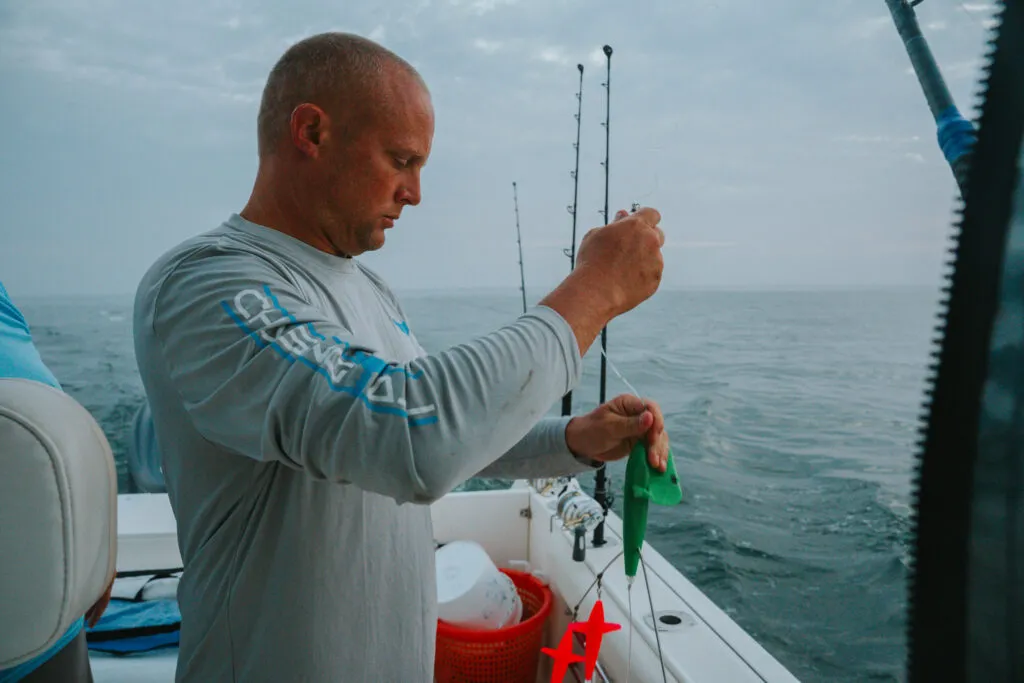
Without going too far down the rabbit hole on speed and electronics, I keep it simple. We troll between 5.5 and 6.5 knots, and I make sure our sonar is dialed in and being used properly.
You need to know when you’re trolling the wrong speed over fish, or just as important, the right speed over nothing. That awareness alone saves hours of unproductive trolling.
Why Side Trackers® Changed Our Spread
When ChatterLures Side Trackers® first hit the scene, I was one of the early captains to put them to work. During a tough bite at the Coimbra wreck, running a set of 36-inch side trackers off my outside riggers immediately separated themselves from every other spreader bar we had in the water.
Today, side trackers are still part of every trolling spread I run. They consistently get bit and help widen the spread in a way traditional bars just cannot.
My Typical First-Light Bluefin Tuna Spread
Here in the Northeast, squid can be abundant on the offshore grounds at different times of the year. Because of that, I like to run larger profile baits, especially in white or pink. With big bluefin spread throughout the water column, I also make sure to keep several baits subsurface while searching for concentrated schools.
Our standard inshore spread at first light usually looks like this:

- Outside Rigger: 19″ Side Tracker® – 6″ Machine Lures – Sand Eel
- Outside Rigger: 19″ Side Tracker® – 6″ Machine Lures – Purple
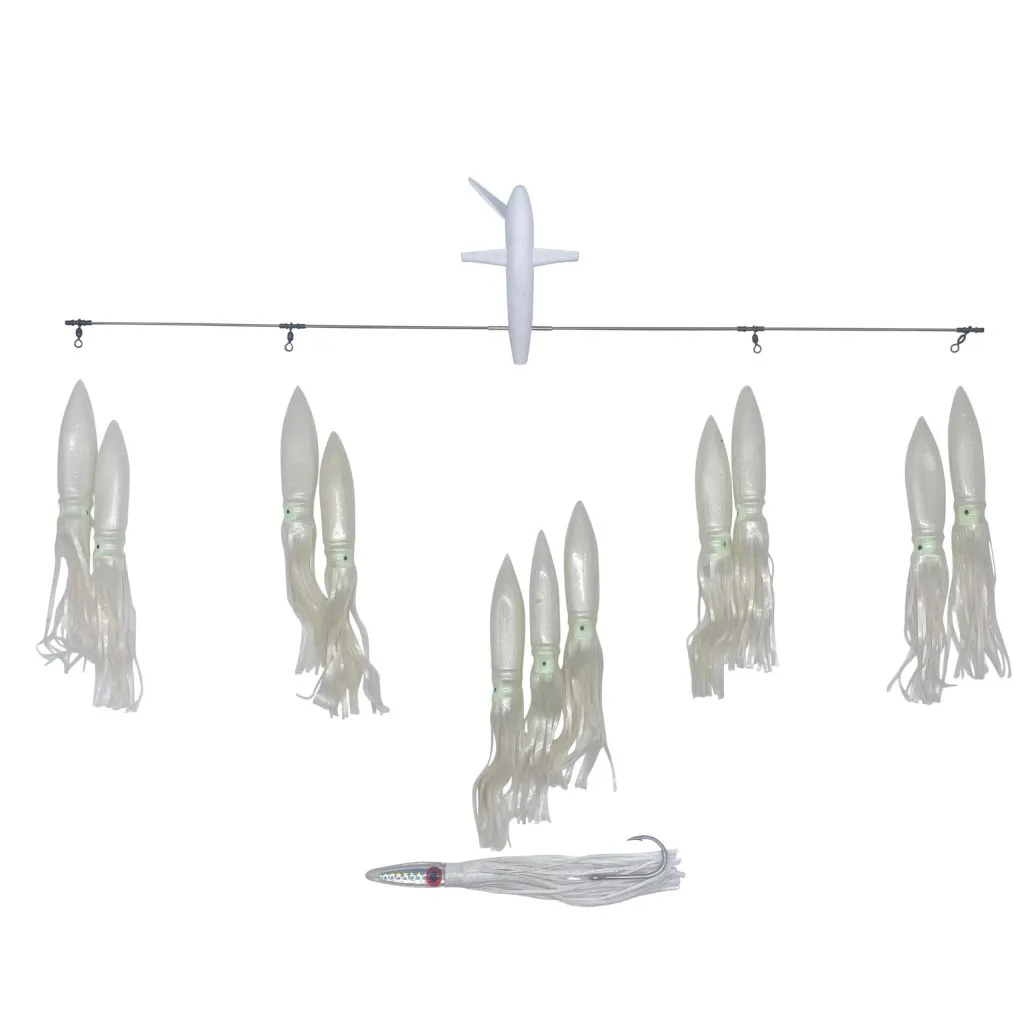
- Inside Rigger: 36″ Side Tracker® – 9″ Floating Bulb Squid White
- Inside Rigger: 36″ Side Tracker® – 9″ Floating Bulb Squid White
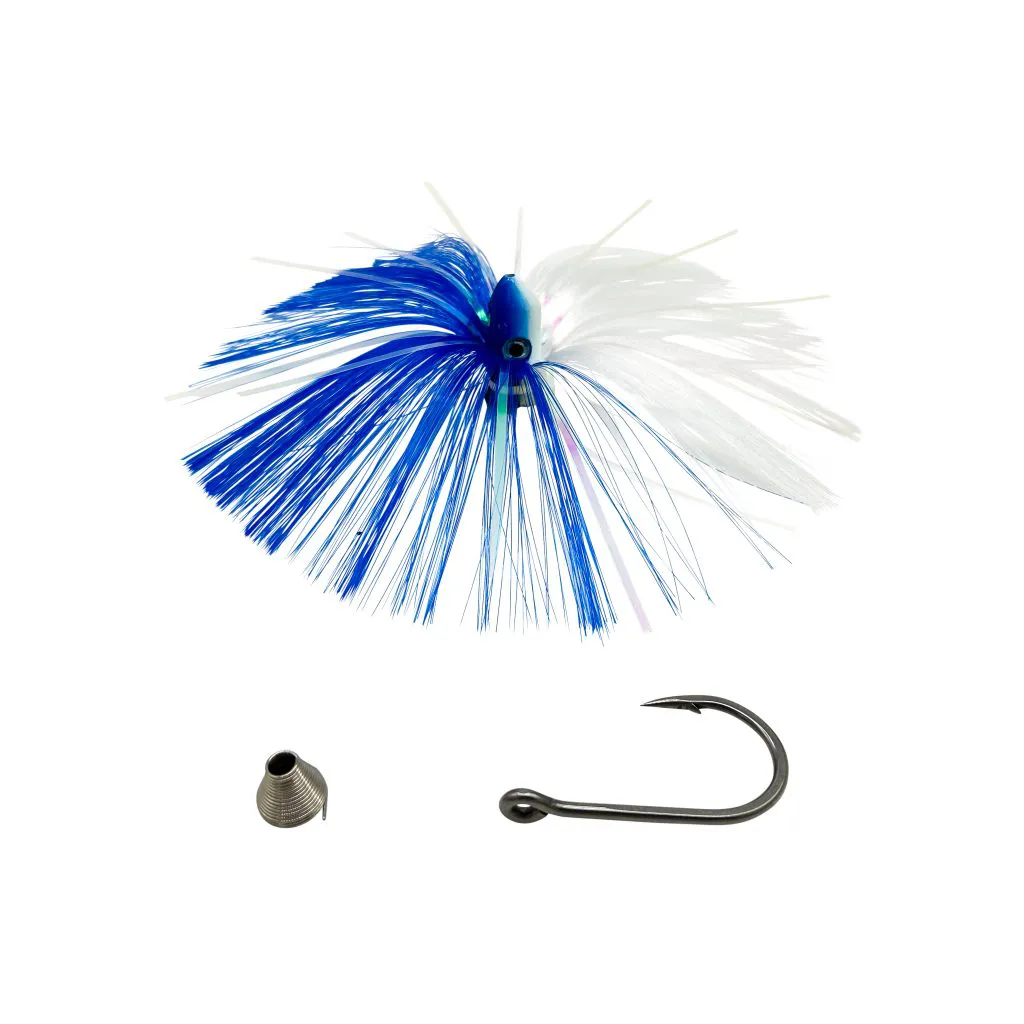
- Center Rigger: 5oz Joe Shute Rigged with Ballyhoo – Blue/White
- Stern Corner: Deep Diving Trolling Plug
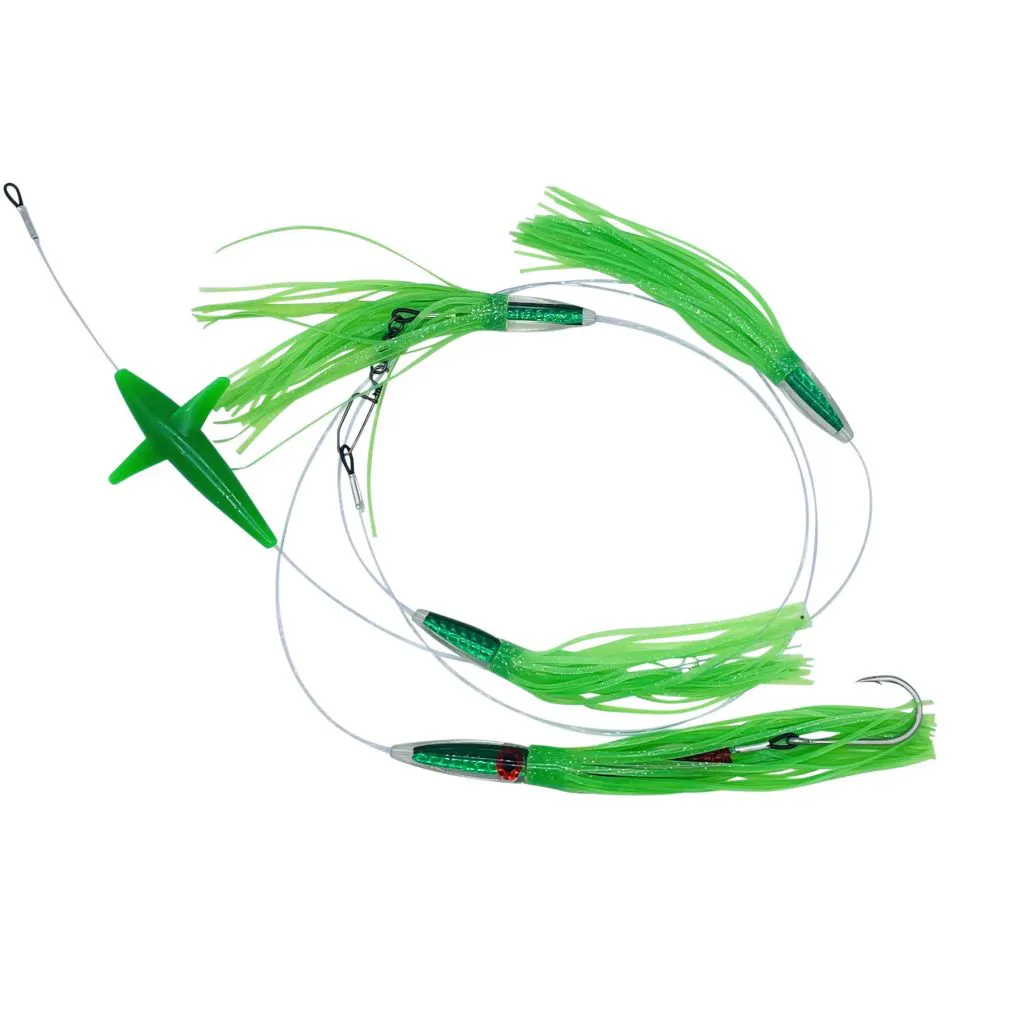
- Stern Corner: 9” Chatter Machine Daisy Chain – Green
Always adapt your spread to the bite on that particular day. Track what is getting hit and introduce more of those colors or profiles. At the same time, take note of what is not producing. Sometimes a simple positional change within the spread can make a noticeable difference.
Other effective color options for the midshore fishery include lemon lime, joker, and mardi gras.


Changing It Up When the Bite Slows
When a larger profile and increased surface disturbance are needed, the 24-inch or 36-inch Wingman side tracker bars are excellent options. In 2024, Calamari was our top-producing bar, likely due to the consistent presence of squid throughout the season.
Machine bars perform well, but some days bulb squids simply outproduce them. Bulb squids run higher, create more surface splash, and offer a larger profile. Six- and nine-inch bulb squids are also lighter, making them easier on outriggers. One key advantage is that if the boat is stopped while fighting a fish and the bars remain deployed, bulb squid bars float.
Shutes, Trailers, and Noise Management
Joe Shutes are a favorite of both bluefin and yellowfin tuna, and we also catch plenty of mahi and wahoo on them. Rigging ballyhoo can feel intimidating, or you may not always have them on hand. Substituting a RonZ tail for a ballyhoo makes running shutes much simpler and cuts down on storage issues.
Noise is often a positive trigger, but there are times when switching to a traditional, non-side-tracking bar can make a difference. Boats with outriggers can take advantage of this more easily, but it can work from almost any position. I also like running traditional bars off the stern corners when the bar bite is hot, replacing divers or shutes.
Custom Bar Combinations That Produce
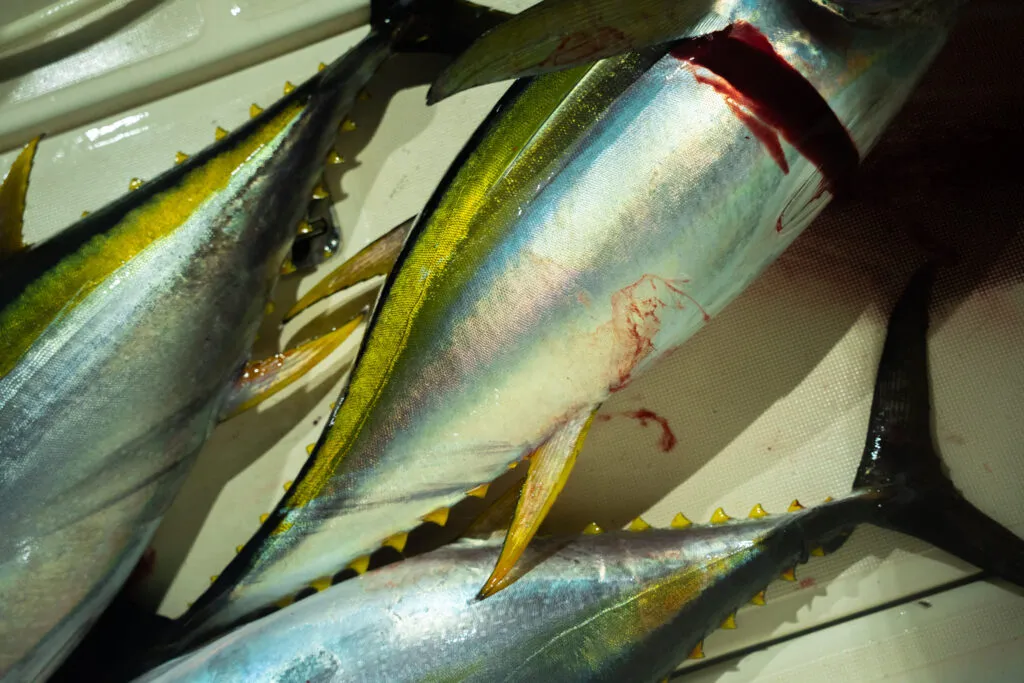
With Carlson Offshore Tackle now part of the arsenal, already productive combinations have become even better. In 2025, the herring color outproduced every bulb squid bar in the spread. Built with yellow birds, that bar caught bluefin, yellowfin, and bigeye trip after trip.
With the custom options available from ChatterLures, the possible combinations are nearly endless.
Confidence Is Everything When Trolling
At the end of the day, confidence in your spread matters. Make sure every bait is positioned exactly where you want it and running clean. Many of the small details come from time on the water, attending seminars, and learning from other experienced captains.
Most importantly, if something doesn’t look right, it isn’t right. A single lure running poorly can ruin the appearance of the entire spread. Focus on delivering a clean, natural presentation, and the bites will come.
Fish the Exact Spread I Run
If you want to fish the same setup I run aboard Blue Line Charters, you can now purchase the Captain Kevin’s Bluefin Tuna Trolling Spread.
This bundle includes the core side trackers, machines, and daisy chain I rely on throughout the Northeast season. It’s built to deploy clean, cover water efficiently, and perform in a wide range of conditions.
Shop Captain Kevin’s Blue Line Charters Bluefin Tuna Trolling Spread from ChatterLures
Captain Kevin Albohn is the owner and operator of Blue Line Charters out of Watch Hill, Rhode Island. He offers instruction and charters targeting bluefin, yellowfin, and bigeye tuna and conducts seminars throughout the Northeast during the winter months. He can be contacted through bluelinesportfishing.com.